 All articles
  Contextual Advertising
  Design
  Development
  Internet Marketing
  SEO
SEO  Targeted Advertising
  Technologies
SEO for a new website: how to promote a project from scratch in Google and Yandex

A new website almost always starts at a disadvantage. Competitors already have domain history, traffic, backlinks, behavioral signals, content, and search engine trust. A new project has a clean slate. Sometimes it’s beautiful, fast, and expensive, but still unfamiliar to Google and Yandex.
That’s why SEO for a new website needs to start not after launch, but before it. The mistake many companies make is to build the site “however it turns out” first, and then try to promote pages that don’t match demand, don’t satisfy user intent, and have indexing problems.
How SEO promotion of a new website differs from working with an established project
A new website has no accumulated reputation. Search engines are just beginning to understand who to show its pages to, how useful they are, and whether the resource can be trusted.
Key differences:
- No history of organic traffic
- Few or no external backlinks
- Pages may take a long time to be indexed
- Search engines need time to assess quality
- Harder to rank quickly for competitive queries
- Structural errors are especially costly
- Initial results come more often from low-frequency queries
Promoting a new website is not a race to the top in the first month. It’s about building the foundation: structure, keyword research, technical base, content, analytics, and gradually building trust.
Where to start promoting a new website
You need to start not with texts or links, but with understanding demand. The site should be built around how people search for a product, service, or information.
The basic sequence looks like this:
- Study the niche and competitors
- Build a keyword universe (semantic core)
- Group queries by intent
- Design the site structure
- Prepare the technical foundation
- Optimize the main pages
- Set up analytics
- Launch indexing
- Gradually expand content
- Track rankings, traffic, and conversions
If this sequence is broken, the site may look good but still not receive search traffic.
Keyword research and structure: the foundation of SEO for a new website
The keyword universe shows which pages are actually needed. For a new project, it’s especially important not to try to cover everything at once. It’s better to start with queries where there’s a chance to get initial impressions and clicks.
| Query type | Example | Why it’s useful for a new site |
| Commercial | buy, order, price, service | Drives inquiries and sales |
| Informational | how to choose, what is, guide | Provides reach and expertise |
| Low-frequency | precise long-tail queries | Yields first rankings faster |
| Geo-dependent | service + city | Helps local promotion |
| Branded | company name | Builds basic visibility |
Each group of queries should lead to its own page. If you mix everything together on one page — service, article, FAQ, comparison, and catalog — it’s harder for search engines to understand its purpose.
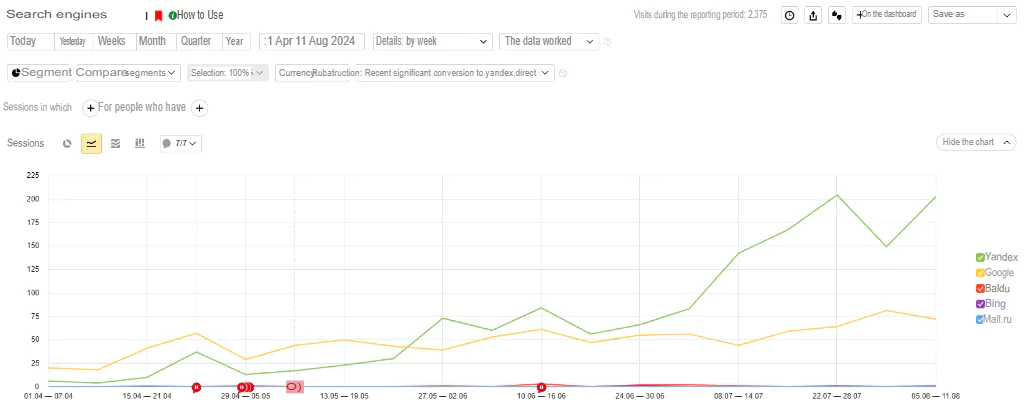
Technical optimization of a new website
Optimizing a new website begins with a technical audit. Even strong content won’t save you if pages are blocked from indexing, contain duplicates, or load too slowly.
Check the following:
- txt file;
- xml;
- Correct canonical tags;
- Server response codes;
- Mobile responsiveness;
- Page load speed;
- No duplicate content;
- SEO-friendly URLs (transliterated or readable);
- Schema markup / microdata;
- Internal links;
- Correct title and description tags;
- No empty or technical pages in the index.
For a new website, it’s critical not to let junk pages get indexed: filters, test pages, duplicates, technical URLs. Cleaning them out later is much harder.
How to prepare pages for promotion in Google and Yandex
SEO promotion of a new website in Google and Yandex is built on a similar foundation, but the emphases differ.
Google typically takes longer to evaluate a new domain, paying closer attention to authority, content quality, backlinks, and the overall reputation of the resource. Yandex responds more quickly to commercial and behavioral factors, regional relevance, site usability, and the quality of the answer to a query.
For each important page, you need:
- One clear intent;
- A precise H1 heading;
- Unique title and description meta tags;
- Logical H2–H3 heading structure;
- Useful content without keyword stuffing4
- Answers to frequently asked questions (FAQs);
- Commercial elements: prices, terms, advantages;
- Internal linking;
- Quick access to making an inquiry or purchase.
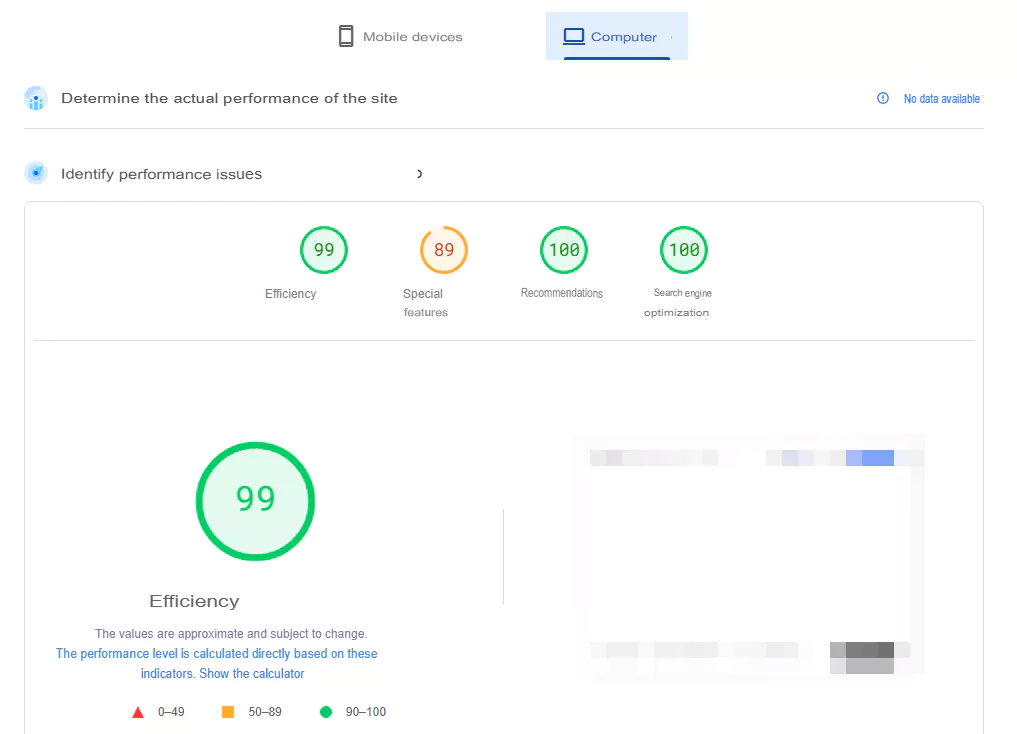
If the goal is to promote a new website to the top of Google, it’s especially important not to limit yourself to formal SEO optimization. You need expertise, completeness of the answer, a solid structure, and evidence: case studies, examples, specifications, comparisons, reviews, photos, tables.
Content strategy for a new website
A new website should not be limited to just the homepage and a couple of service pages. It needs a content map: which pages are launched immediately, which are added later, and which articles support the commercial sections.
A working framework:
- First, the core commercial pages;
- Then, landing pages for niche services or categories;
- After that, articles addressing informational demand;
- Then, comparisons, guides, curated lists, FAQs;
- Finally, updating old materials based on analytics data.
For a new website, topics with clear intent work well. Not “apartment renovation,” but “how much does a one-bedroom apartment renovation cost,” “which renovation to choose for a new construction,” “turnkey renovation stages.” Such queries are easier to rank for and easier to connect to an inquiry.
External optimization: when are backlinks needed?
A new website needs backlinks, but not in the form of a sudden purchase of hundreds of referring domains. That approach can look unnatural and won’t provide real benefit.
It’s better to start carefully:
- Register the company in relevant directories;
- Set up business profiles on maps and local listings;
- Get mentions on industry-specific platforms;
- Publish expert articles;
- Develop PR and partnership placements;
- Monitor the quality of referring domains.
For a new website, natural growth of the link profile is more important than quickly accumulating mass. Especially if the domain has just been registered and has no history yet.
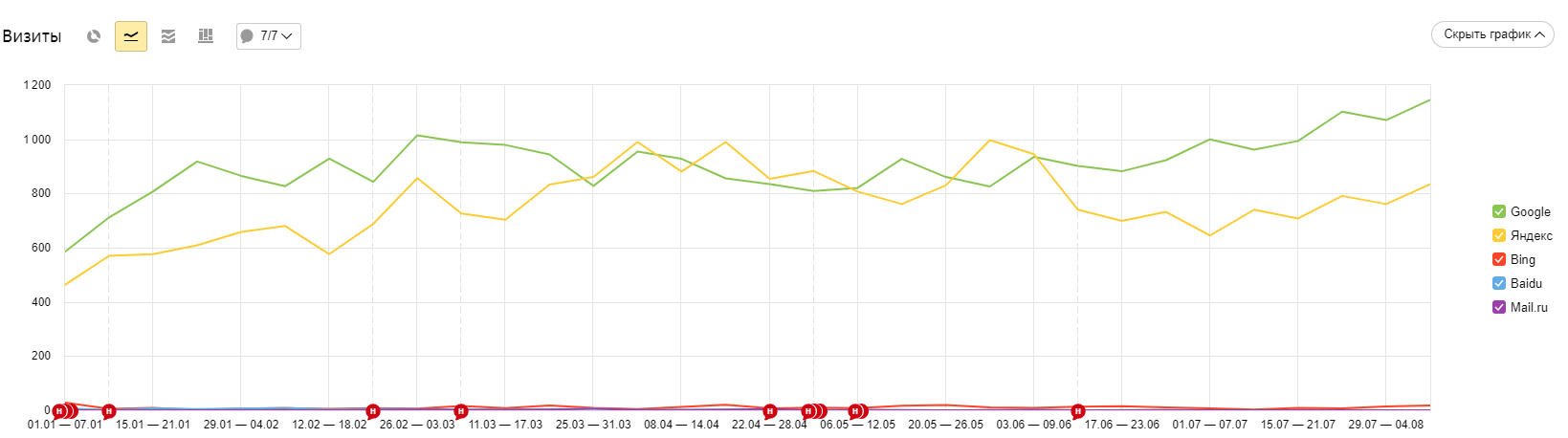
When analysing data from Metrics, you can track various factors and adjust your strategy
Analytics: what to set up immediately
Without analytics, it’s impossible to understand whether SEO is working. Therefore, before active promotion begins, you need to set up:
- Yandex Metrica;
- Google Analytics;
- Yandex Webmaster;
- Google Search Console;
- Goals and events;
- Form tracking;
- Call tracking;
- UTM tagging for advertising;
- Organic traffic reports;
- Rank tracking.
At the start, not only inquiries matter. You also need to look at intermediate signals: indexing, impressions, CTR, early rankings, and clicks on low-frequency queries.
Timelines for promoting a new website
Initial technical results can be seen quickly: pages get indexed, errors are fixed, impressions appear. But sustainable SEO promotion of a new website typically takes months.
| Period | What happens |
| Month 1 | Audit, keyword research, structure, technical preparation |
| Months 2–3 | Indexing, first impressions, growth for low-frequency queries |
| Months 3–6 | First noticeable rankings and organic traffic |
| Months 6–12 | Steady growth, expanded keyword coverage, inquiries |
| 12+ months | Strengthened rankings and SEO scaling |
Timelines depend on competition, website quality, implementation speed, region, budget, and the state of the niche.
Example strategy for a new website
Imagine a new apartment renovation company in a specific region. The site has just launched, the domain is new, and there is no traffic.
The strategy might look like this:
| Stage | Work | Goal |
| Month 1 | Keyword research, structure, technical audit | Remove errors before indexing |
| Month 2 | Optimize service pages and geo-pages | Get first impressions |
| Month 3 | Publish articles addressing customer questions | Generate informational traffic |
| Months 4–6 | Strengthen commercial pages | Get first inquiries from search |
| Months 6–12 | Expand landing pages, build links, refresh content | Solidify growth |
This approach is more realistic than trying to rank the homepage for the most competitive query right away.
Common mistakes when promoting a new website
The most dangerous mistakes occur even before SEO starts:
- The site is built without keyword research;
- The structure copies the competitor’s menu rather than actual demand;
- All services are bundled onto a single page;
- Technical pages get indexed by mistake;
- Texts are written “for volume” rather than for intent;
- Title and description tags are duplicated;
- No internal linking structure;
- Analytics are set up only after launch;
- Backlinks are purchased too aggressively;
- SEO begins only after development is complete.
It’s easier to build a new site correctly from the start than to later redo the structure, URLs, content, and indexing.
Expert commentary
A new website cannot afford chaos. An established project can sometimes overcome errors thanks to its history, brand, and accumulated traffic. A new one cannot.
That’s why it’s better to spend time on structure, keyword research, and the technical foundation before launch. This doesn’t slow down promotion—on the contrary, it shortens the path: search engines immediately see a clear, well-organized, and useful resource.
SEO for a new website is not magic, nor is it just waiting out a “sandbox.” It is systematic work with trust, demand, and page quality.
Checklist for launching SEO on a new website
Before active promotion, check that:
- Keyword research is complete;
- Site structure matches demand;
- Main pages are optimized;
- txt is configured correctly;
- xml is created and submitted;
- Duplicates are blocked or eliminated;
- The site is mobile-friendly;
- Pages load quickly;
- Yandex Metrica and Google Analytics are set up;
- The site is added to Yandex Webmaster and Google Search Console;
- Goals and forms are being tracked;
- There is a content publication plan;
- Internal linking is set up;
- A strategy for external mentions is prepared.
If the site hasn’t launched yet, the most useful action is to check it before publication: structure, keyword research, indexing, technical settings, and analytics. This makes it easier to avoid errors that would otherwise slow down promotion for months.
Key takeaways
- SEO for a new website starts before launch, not after;
- The foundation is keyword research and proper site structure;
- Initial results come from low-frequency queries;
- Google and Yandex evaluate new websites differently;
- Technical optimization is critical at the start;
- Content must address specific intent, not just be “filler”;
- Backlinks are needed, but growth should be natural;
- Mistakes at the start are more costly than preventing them.
FAQ
Start with keyword research, structure, and technical optimization. Then optimize the main pages, set up analytics, submit the site for indexing, and gradually expand content for low-frequency and commercial queries.
First impressions and low-frequency rankings can appear within 2–3 months. More noticeable growth is typically assessed over 3–6 months, while sustainable results take 6–12 months.
For low-frequency queries, sometimes yes. For competitive commercial queries, quick ranking is difficult: Google needs time to assess the quality, trustworthiness, and authority of the site.
In Yandex, regional relevance, commercial factors, page quality, site usability, and user behavior are especially important. For local businesses, this can offer good opportunities with a well-structured site.
Yes, but gradually. It’s better to start with quality mentions, directories, partner materials, and industry-specific platforms. Mass link buying at the start can be harmful.
It’s better to start before launch. That way, you can immediately build in the correct structure, URLs, meta tags, indexing, analytics, and content strategy.
We recommend you to read

Introduction: why you need to promote your online store
Creating an online store is only the first step in a long...

If you have a website on Tilda, you have probably wondered how to promote your Tilda website on search engines in...

Imagine this scenario: you have a website, but every time you want to change the text or add a page, you have to...

Promoting construction websites is a complex and multifaceted process that requires a specialised approach. Given the...


