 All articles
  Contextual Advertising
  Design
  Development
  Internet Marketing
  SEO
SEO  Targeted Advertising
  Technologies
Choosing a CMS for your website: a comprehensive guide to platforms

Imagine this scenario: you have a website, but every time you want to change the text or add a page, you have to contact a developer. Sounds a bit of a hassle, doesn’t it? That’s exactly why CMSs – content management systems – were invented.
A CMS (Content Management System) is a platform that allows you to manage a website without any programming. Essentially, it’s a control panel through which you can edit pages, publish articles and add functionality.
When it comes to choosing a CMS for a website, it is important to understand a simple thing: the system itself becomes the foundation of the project. It determines the site’s development speed, SEO capabilities, and ease of content management.
Simply put, a content management system turns a complex technical product into a tool that anyone can use.
A CMS allows you to:
- manage content,
- add new pages,
- control the design,
- extend functionality.
That is why virtually all projects today—from blogs to large online stores—use website engines.
How to choose a CMS for a website: key criteria
When the question of how to choose a CMS arises, many start looking for “the most popular platform.” In practice, this approach rarely works. There is no universal system—it all depends on the project’s goals.
For example, a blog and an online store require completely different solutions. Therefore, which CMS to choose for a website is a matter of strategy, not just technology.
At the same time, there are several criteria that help make the right choice of platform for a website.
Key criteria for choosing a CMS
When selecting a CMS, consider:
- type of website,
- project scale,
- development budget,
- SEO capabilities,
- developer availability,
- platform security.
For example, for a small company website, WordPress is often sufficient. For a complex portal, Drupal or even a framework may be needed.
What matters is that a CMS for business should not only solve current tasks but also allow the project to scale. Otherwise, in a couple of years the site will have to be rebuilt.
The most popular CMS for creating websites
When you start exploring website engines, it is easy to get lost: there are dozens of platforms, each promising to be the “best.” But looking at the web development market, the range narrows significantly. There are several popular CMS used by most projects—from blogs to large online stores.
Why these? Simply put: a strong community, a large number of modules, and a clear architecture. In other words, the site can be launched faster and scaled more easily.
Let’s look at the most common CMS platforms in more detail.
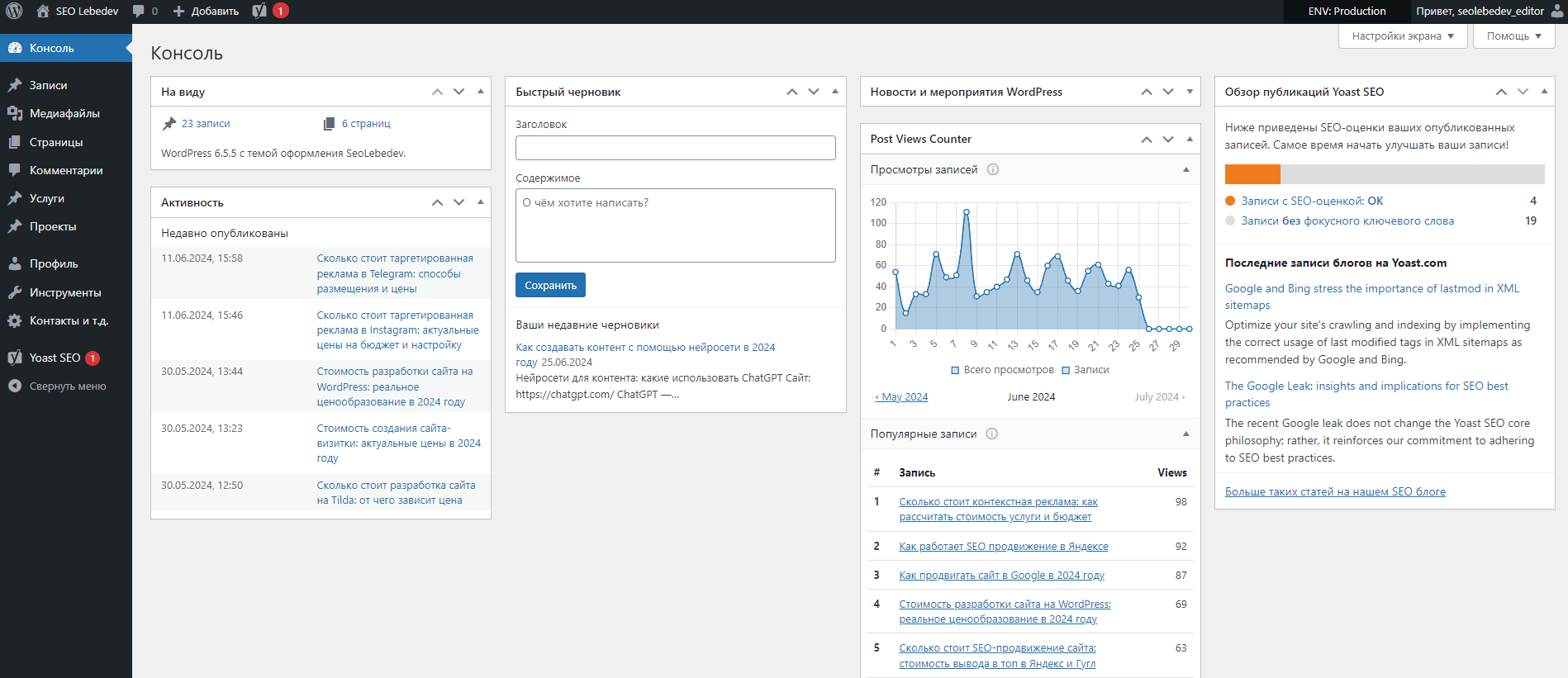
WordPress
 WordPress is the most popular CMS in the world. By various estimates, it powers over 40% of all websites on the internet.
The platform started as a blogging engine but has evolved into a universal system.
Suitable for:
- blogs,
- company websites,
- landing pages,
- online stores (via WooCommerce).
Main advantages:
- huge ecosystem of plugins,
- large number of developers,
- user‑friendly admin panel,
- strong SEO capabilities.
Essentially, WordPress is a universal solution for most small and medium‑business websites.
Shopify
Shopify is a specialized CMS for online stores. Unlike many other systems, it works as a SaaS platform: the site is hosted on Shopify’s servers, and the user does not need to worry about hosting.
The platform is ideal for launching e‑commerce projects.
Key features of Shopify:
- quick launch of an online store,
- built‑in payment systems,
- integrations with marketplaces,
- convenient product management panel.
However, there is a nuance: Shopify operates on a subscription basis. Therefore, for long‑term projects, the cost may be higher than with open‑source solutions.
Joomla
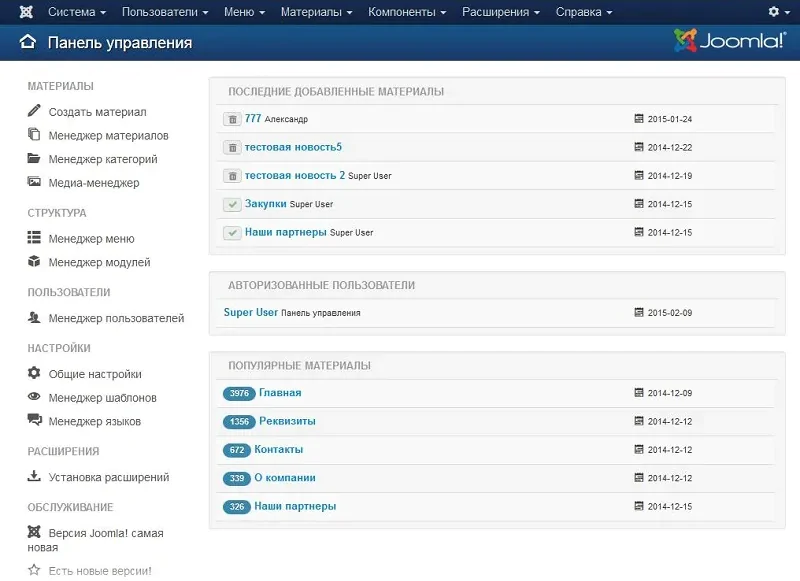
 Joomla is one of the oldest CMS platforms. It occupies a middle ground between simple WordPress and more complex Drupal.
This system is suitable for projects that require a flexible site structure and a complex section architecture.
Joomla is often used for:
- corporate websites,
- educational portals,
- content projects.
Platform advantages:
- flexible content management,
- built‑in multilingual site features,
- high flexibility in page structure.
On the other hand, Joomla’s interface is more complex than WordPress, so beginners may find it less user‑friendly.
OpenCart
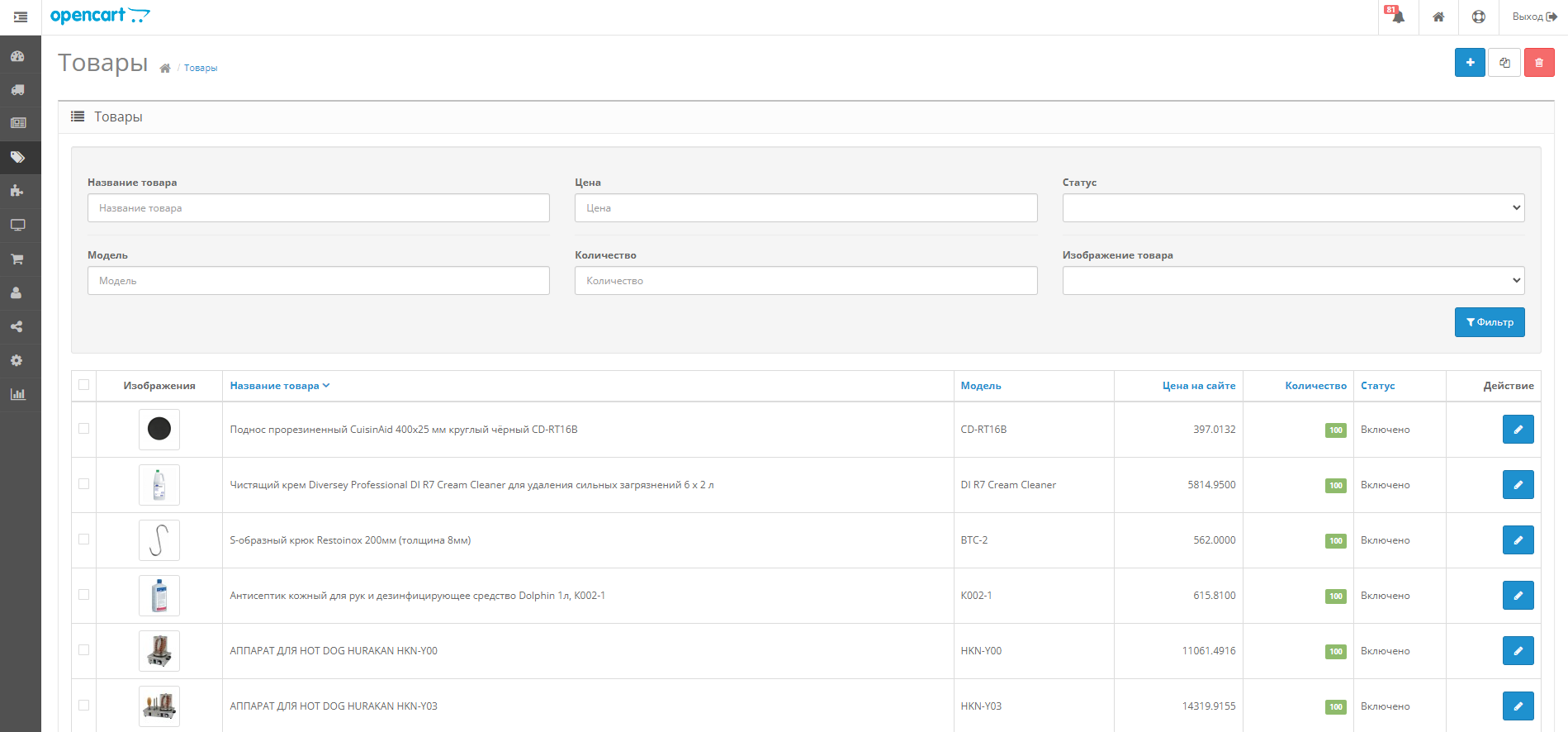
 When it comes to e‑commerce engines, OpenCart often appears as one of the first options.
It is a free CMS specifically created for e‑commerce.
Suitable for:
- online stores,
- product catalogs,
- projects with a large number of items.
Pros of OpenCart:
- free system,
- convenient product catalog management,
- a large number of modules.
However, for complex stores, additional functionality development is sometimes required. Therefore, large projects often migrate to Magento or custom solutions.
Drupal
 If WordPress is a universal CMS, Drupal is often chosen for complex projects. This system is used for portals, government websites, and large corporate platforms.
Drupal is known for its flexibility and scalability.
It is suitable for:
- large portals,
- websites with a high number of users,
- complex corporate projects.
Main advantages of Drupal:
- high security,
- flexible architecture,
- ability to create complex data structures.
But there is a downside: Drupal development requires experienced specialists, so project costs are typically higher.
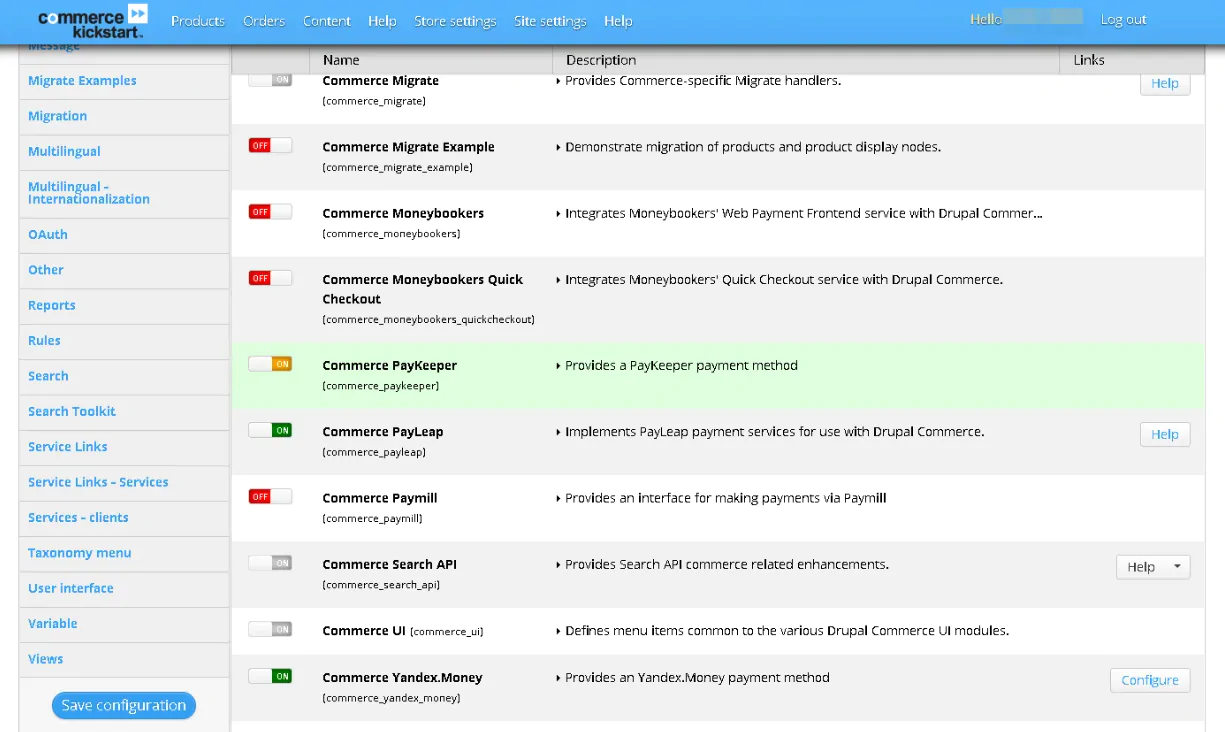
CMS ranking for websites: detailed comparison of popular platforms
When choosing a CMS for a website, people often look for the “best system.” The truth is that no universal platform exists. Some CMS are ideal for blogs, others for online stores, and still others for complex corporate projects.
Therefore, instead of an abstract ranking, it is more useful to compare platforms by key parameters: complexity, SEO capabilities, development cost, and project type.
Below is an extended comparison of popular website engines, typically used when selecting a platform.
| CMS | Best suited for | Complexity | SEO capabilities | Development cost |
| WordPress | blogs, company websites, landing pages | low | very good | low – medium |
| Shopify | online stores | low | good | medium (subscription) |
| OpenCart | medium‑sized online stores | medium | good | medium |
| Joomla | corporate websites | medium | good | medium |
| Drupal | large portals and complex projects | high | excellent | high |
| Magento | large online stores | high | good | high |
Simply put:
- WordPress is the most versatile engine,
- Shopify offers a quick start for an online store,
- OpenCart is a popular CMS for e‑commerce,
- Drupal is a platform for complex projects.
Sometimes entrepreneurs try to choose a CMS based only on popularity. But what matters far more is how well the platform fits the project’s goals.
For example, an online store on Drupal may be overly complex, while a blog on Magento would simply be overkill.
The best CMS for an online store
When it comes to e‑commerce, platform selection becomes especially critical. An online store requires a product catalog, filters, payment integration, and a convenient order management system.
Therefore, the question of which CMS to choose for an online store is usually considered separately from other types of websites.
Today, there are several popular e‑commerce platforms.
In short, the ranking of CMS for online stores usually depends on the business scale. For small projects, WooCommerce or Shopify are suitable; for large ones, Magento.
CMS for blogs and content sites
Blogs and media sites have their own platform requirements. Here, ease of working with text, SEO tools, and the ability to publish new content quickly are important.
Therefore, a CMS for a blog is usually chosen from systems originally oriented toward publishing.
Best CMS for content sites:
- WordPress – the most popular blogging platform in the world,
- Ghost – a modern CMS for bloggers and media,
- Drupal – suitable for large content projects,
- Joomla – a versatile CMS with blogging capabilities.
WordPress remains the leader among CMS for content. The reason is quite simple: a user‑friendly editor, a huge number of plugins, and good SEO optimization.
Sometimes a blog is launched on WordPress, and only later the site is transformed into a full‑fledged portal. Honestly, that strategy often proves quite successful.
The best engine for a social network or a complex project
Sometimes standard CMS can no longer handle a project’s requirements. For example, when planning to build a marketplace, a social network, or a complex portal with a large number of users. In such cases, choosing a CMS becomes more complex.
The point is that traditional website engines like WordPress or OpenCart are designed for content projects and online stores. But if the site needs to process large volumes of data or implement complex logic, other solutions are needed.
Therefore, for large‑scale projects, more flexible platforms or frameworks are often used.
Platforms for complex projects
For large websites and web applications, suitable options include:
- Drupal – a powerful CMS for portals and large corporate sites,
- Laravel – a popular PHP framework for web applications,
- JavaScript‑based solutions – suitable for high‑load services,
- custom CMS – systems developed specifically for the project.
Such platforms for web applications allow creating projects with personal accounts, complex user role systems, and integrations with external services.
Frankly, at this point it is not only about the CMS but also about the overall project architecture.
Comparison of CMS for online stores
For e‑commerce, platform choice is particularly important. An online store is not just a website but a complete system for managing products, orders, and payments. Therefore, comparing CMS for online stores helps determine which platform is the best fit.
Some systems focus on quick launch, others on scalability and complex functionality.
| CMS | Advantages | Limitations |
| Shopify | quick launch, ready‑made templates, built‑in payments | monthly subscription |
| WooCommerce | flexibility, integration with WordPress | requires hosting |
| OpenCart | free CMS, convenient product catalog | sometimes needs custom development |
| Magento | scalability, suitable for large stores | high development cost |
If the project is small or just starting, WooCommerce or Shopify are often chosen.
But for large online stores with thousands of products, Magento is typically used.
Case study: how the choice of CMS influenced website growth
Sometimes the right platform choice can significantly accelerate a project’s development. Let’s look at an example.
An online store in the home goods niche decided to launch a new website. Initially, several CMS options were considered. After analysis, the team chose WooCommerce—a plugin for WordPress.
What was done
- WooCommerce was selected as the platform,
- a convenient catalog structure was developed,
- SEO optimization of pages was implemented.
Result
A few months after launch:
- organic traffic grew,
- the number of orders increased,
- page indexing improved.
Why did this work? WordPress proved convenient for SEO and content management, and WooCommerce allowed flexible configuration of the product catalog.
Sometimes the right CMS platform can simplify website development for years to come.
Roman Lebedev
Choosing a CMS should be based on business goals. There is no universal platform—it is important to consider the project’s scale, the team’s capabilities, and the site’s growth prospects. A properly chosen content management system can significantly simplify project development and reduce maintenance costs.
Conclusion
Choosing a CMS for a website is one of the most important stages of development. The platform affects content management convenience, scalability options, and maintenance costs.
Therefore, when selecting, it is important to consider several factors: the type of website, development budget, and future plans for the project.
Sometimes a simple CMS like WordPress turns out to be the ideal solution. Other times, a project requires a more complex architecture.
If you are planning to launch a website, start by choosing the right CMS for your site. The appropriate platform will help you scale the project faster and attract clients more effectively.
FAQ
The choice depends on the project’s requirements. WordPress is more commonly used for blogs, whilst Shopify or WooCommerce are used for online shops.
WordPress is considered the most popular CMS in the world thanks to its ease of use and wide range of plugins.
Shopify, WooCommerce, OpenCart and Magento are commonly used for e-commerce.
Yes, but migrating a website can be complicated and may require changes to its structure and functionality.
Yes. A CMS affects a website’s functionality, development costs and scalability.
We recommend you to read

Introduction: why you need to promote your online store
Creating an online store is only the first step in a long...

Google Ads contextual advertising is one of the most effective ways to attract targeted traffic to your website....

When I was invited to join a small manufacturing business to ‘find someone for advertising,’ there were only a couple...

Facebook Ads Manager is one of the most powerful internet marketing tools, allowing companies to launch targeted...


